
Service
Digital Parking Enforcement
We cover entire neighbourhoods in a single pass – camera-based, with reviewed records and reporting you can base your planning on.

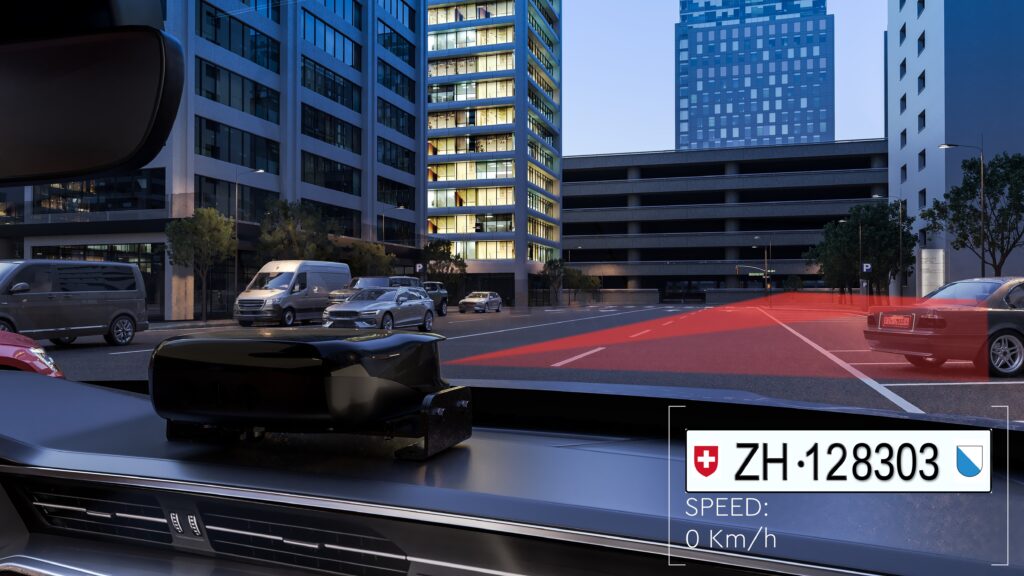
- Automatic capture of licence plate, location and time during the patrol – by day and by night.
- Automatic matching against permits, season tickets and overnight parking whitelists.
- Every single case reviewed and released by a member of staff – no fully automated penalties.
- Records issued with photographic and location evidence, including payment handling on request.
- Reporting on hotspots, coverage and contravention rates as a basis for your planning.
- Operation compliant with the Swiss Federal Act on Data Protection: purpose limitation, short retention periods, logged access.
The situation
Enforcing parking rules is labour-intensive. A single officer can check only a limited number of vehicles per day, and the workload grows with every additional zone. Where staff are short, coverage falls – and with it the effect of the parking regime. Vehicles blocking cycle lanes, pedestrian crossings and pavements go unchallenged, even though this is precisely where the most vulnerable road users are at risk.
Digital enforcement addresses exactly this point. It does not replace human judgement – it replaces the search that precedes it.
Grounded in practice
Parking is not new territory for us. DSV AG has been looking after parking and traffic installations across Switzerland since 1998 – from the single parking meter to complete guidance systems. We know how this work runs day to day, not from a product brochure.
That shapes how we set up digital enforcement. We know which contraventions get challenged and which evidence holds up when they do. We know where permit lists drift apart in practice. And we know that enforcement is worth only as much as the documentation it leaves behind.
Since 1998
serving public authorities and private clients
Three locations
Zürich, St. Gallen, Muttenz
7 x 24 hours
standby via our service centre
The task isn’t new. The reach is.
How enforcement works
The collected data is analyzed in real time. The device immediately performs a comparison with the relevant server (on the customer’s or provider’s side) and creates a corresponding data record for each potential violation. Only those cases that remain as possible violations after the automated comparison are forwarded for manual review by an authorized person. All data pertaining to vehicles that have been properly inspected is deleted in its entirety and automatically immediately after the comparison is completed.
1
Licence plate, location and time captured while driving
2
Automatic matching against whitelists, permits and zone rules
3
Manual image review and release of each individual case
4
Record issued with photographic and location evidence
5
Handover to your process, or full handling by DSV
6
Retention for the agreed period, then automatic deletion
What is detected
Beyond the classic overstay, the system detects situations that have been difficult to police systematically – because they are short-lived and officers are rarely in the right place at the right moment.
- Overstaying the permitted time in blue and white parking zones
- Parking without a valid permit in permit-only zones
- Vehicles obstructing cycle lanes and cycle paths
- Vehicles on pedestrian crossings and pavements
- Blocked access routes, emergency lanes and loading bays
- Overnight parking outside the whitelist
- Unauthorised entry into restricted-access zones [if commissioned]
Systems and deployment
The right equipment depends on the area. Narrow old-town lanes call for something different than residential streets or a single access point. We advise you on the choice and combine the options where it makes sense.
E-bike with scanning unit
For old towns, pedestrian zones and areas a vehicle cannot reach.
Vehicle with scanning unit
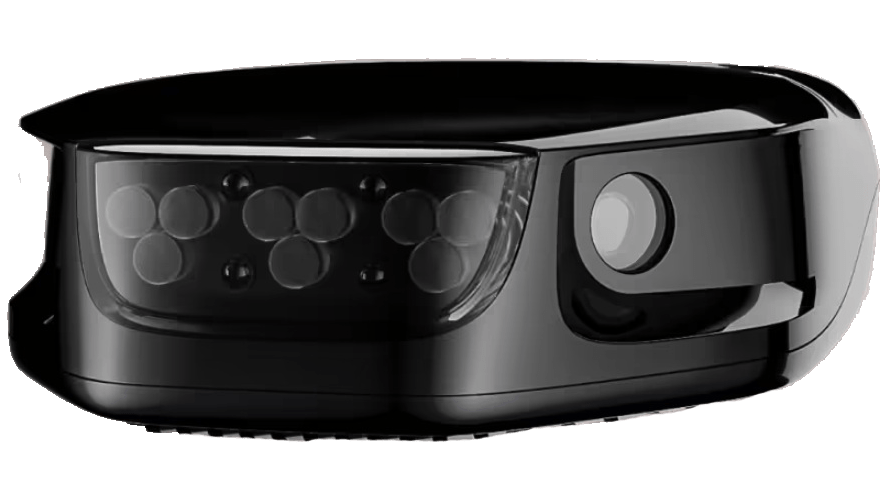
360° capture for neighbourhoods and longer routes. Fits any vehicle with a 12 V supply; installation takes around two hours.
Fixed installation
Permanent monitoring of individual access points, for example where entry is restricted to authorised vehicles.
Day and night operation
Infrared optics allow capture regardless of lighting conditions.

Data protection and compliance
Capturing licence plates means processing personal data. We set up operations from the outset to comply with the Swiss Federal Act on Data Protection and cantonal requirements, and we document the procedures so they can be verified.
- Purpose limitation: data used solely for parking enforcement, no movement profiles
- Automatic deletion of records without contravention after a short, agreed period
- Role-based access rights and logged data access
- Support with your data processing policy, data protection impact assessment and public notice
- Data held in Switzerland
Who does what
On public land, penalties remain the responsibility of the competent authority. DSV AG provides the technical and administrative groundwork. On private sites we carry out enforcement and issue administrative charges (Umtriebsentschädigungen) on behalf of the owner.
One partner, end to end
You decide how far our involvement goes – from supplying and installing the equipment to running the entire operation including case handling. In every model, responsibilities stay clearly defined and our availability stays the same.
- Advice, concept and selection of the right system variant
- Trial operation on a defined area before you commit
- Installation, commissioning and integration with your existing systems
- Training your staff in image review and case handling
- Operation and case handling on your behalf, in full if you wish
- Servicing, maintenance and fault clearance
- Round-the-clock standby via our service centre 0800 084 084
Who this is for
- Towns and municipalities with managed parking zones
- Towns and municipalities with managed parking zones
- Housing cooperatives and property management companies
- Businesses with permit-controlled access
Frequently asked questions
Who issues the fines?
On public land, the competent authority does. DSV AG supplies the reviewed findings together with photographic and location evidence. On private sites we issue administrative charges on behalf of the owner.
How long is the data kept?
Records with no contravention are deleted automatically after a short, contractually agreed period. Cases under challenge remain available for as long as the proceedings require.
Does the software decide whether a contravention occurred?
No. The software proposes cases. Assessment and release are carried out by a person in every single instance.
Can the system be trialled first?
Yes. We set up a trial on a defined area so you can decide on the basis of real figures from your own territory.
Trial it on your own patch
We will show you enforcement in action – on your streets, with your zones, over a defined period. Then you decide on the basis of real figures.